Showing posts with label driving safely. Show all posts

Tuesday, April 3, 2018

Technology and Insurance


Do We Want An Insurance App For That?


Technology is always changing. It seems to change just as I was getting used to how to do things! There are many differing viewpoints on whether this is a good or bad thing. But one thing is for sure; the one thing you know about technology is that it keeps changing. There's an app for just about everything. There are self driving cars (be careful with that one!) There are computers that calculate everything. There isn't much guess work in business these days. Technology has turned the business world upside down and the insurance industry has become a part of that shift. 

Underwriting: 


What used to be several people in a back office crunching numbers is now an algorithm that takes several hundred data points (like age, zip code and history to name a few) and determines what your personal rate is. Ironically, it isn't done by a person any more. 
The latest and newest companies are using AI technology, to do the quoting. Some will go so far as to have their AI have the conversation with you, ask the necessary questions, and send you the quote. Insurance now uses data analytics, a large pool of data, to determine how much of a risk you will be on a policy. And it can be done in a matter of minutes, if not seconds. And there is a new way to assess your driving in real time called Telematics devices. These devices look like a flash drive, plug directly into your car and will track late night driving, mileage, high speed driving and hard breaking, all of which are indicators of risky driving.  It is a tool meant to keep rates lower for the targeted risk pool. It is beneficial (discounts!) for those you drive safely. If you don’t drive safely, it’s not so beneficial. Many people are still wary of the devices. “I don’t want Big Brother watching me!” is a common comment. But you may want to get used to the idea of these devices. I believe they are here to stay (and track).

 Sales:


Today the advertising is geared towards getting you a quote you like quickly. You can compare online in a matter of minutes. Gone are the days of taking your agent's word for their policy being the best for you. 
Progressive Insurance came out with an ad where Flo claimed you had the right to Name Your Price. While you cannot just name your price, you do have so many choices out there, it makes good sense to not shop around. It can be done online, if you don’t want to talk to anyone. You can call and/or email if you want to deal with a rear person. The times of meeting at your agents office are coming to an end. Many agents don’t even have physical offices. Everything can be done by phone, fax or email (sometimes with a real person and sometimes with AI). It’s become very impersonal even though the policies are written based on more of your personal information than ever before. If your personal history is stable, this works in your favor. If you have a credit issues, adverse payment or driving history, this doesn’t work in your favor. But it is the way of the future, so again, you need to get used to the way things work now.

Claims:


Many carriers have mobile apps now for processing claims. Many carriers will not require you to call in the claim. Just process it online, take it to a body shop, have them scan the invoice to the carrier, they pay and you are done.  Now that is only in the most basic of claim scenarios. If there are any questions about who is at fault, the mobile app may not be good at determining the fault. But for open and shut claims, technology can help streamline the process, close out the claim and take care of the customer very quickly.


Technology is meant to improve things. Insurance is no exception. I know it can be hard to change with the technological times, but it can make your insurance experience easier and quicker. Whether it makes it less expensive usually depends on how good a risk you are. 


There are three ways to request a quote for your insurance needs: 

* Visit our website
* Call Brockman Premier Insurance at 877-987-8683  


Tuesday, March 20, 2018

Distracted Driving

Eyes on the Road Folks!

My high school basketball coach was my driver's ed instructor and the main thing I remember was him constantly telling us 


"Pay attention, eyes on the road!" 


Teachers don't teach driver's ed any more. We paid $400 for my oldest son to go to a Drivers ed school and $150 for my daughter to do the "Parent taught" drivers ed. (Truth be told, that one is more self taught)  Both kids drove with me in the car for hours and hours before I would turn them loose on their own. They both heard those same words many times. "Pay attention, eyes on the road!" 


What is Distracted Driving?


According to the CDC, 9 people are killed each day and 1,000 more are injured in Distracted Driving accidents. 

There are 3 types of distracted driving:

  • Visual: taking your eyes off the road;
  • Manual: taking your hands off the wheel; 
  • Cognitive: taking your mind off of driving


There are many distracted driving activities like eating, talking to passengers, changing radio stations, using your gps. The list is long. At the top of that list is Texting because it incorporates all three types; you take your eyes off the road, your hand off of the wheel and your mind off of driving. It has become an all too common issue. And did you know the 3rd highest cause of accidents due to distracted driving is watching Netflix? Seriously.


Low gas prices have encouraged more people to drive more often and longer distances.  Growing cities (and their populations which means more traffic) have added to stop and start traffic accidents. Cell phone usage (while driving) has added exponentially to distracted driving. In recent years, distracted driving has caused almost 400,000 people to be injured in car accidents annually, with over 3,000 resulting in death. 

Aside from the human life/pain factor, there are the financial factors. Both the people involved in the accidents and the carriers are affected financially by claims. So carriers penalize bad driving history since they will be the ones paying out the claims, which generally pay you much more than you have paid in insurance premium. 

I know Three great reasons to pay attention and keep your eyes on the road!
You could die.
You could kill someone else.
It is expensive.

So let's all do each other a favor and

Pay Attention and Keep Your Eyes On the Road!


There are three ways to request a quote for your insurance needs: 
* Visit our website
* Call Brockman Premier Insurance at 877-987-8683  


Tuesday, February 27, 2018

Tracking Driving Behavior

Should You Let "Big Brother" 

Track Your Driving?


If you have shopped for Auto insurance recently, chances are you have learned about Telematics devices that track your driving for the carrier. Progressive has Snapshot, Safeco has RightTrack, State Auto has Safety 360, to name a few.  
We get people pushing back, telling us they don’t want “Big Brother” spying on them. But this isn’t spying, namely because they cannot get the information without your consent and participation (You have to intentionally plug the device in or download an app). And it is a good idea, especially if you are in the less hazardous group of drivers.  Let me explain why.

Why is this a good idea?


Auto insurance is changing. Distracted driving has driven claims payouts over the carriers’ budgets.  According to the CDC, 9 people are killed each day and 1,000 more are injured in Distracted driving accidents. Aside from the human life/pain factor, there are the financial factors. Both the people involved in the accidents and the carriers are affected financially by claims. So it makes sense for Carriers to want to know what type of driver you have been before they decide what kind of pricing to give you.They will be the ones paying out the claims, which generally pay you much more than you have paid in insurance premium. 

Low gas prices have encouraged more people to drive more often and longer distances.  Growing cities (and their populations which means more traffic) have added to stop and start traffic accidents. Cell phone usage (while driving) has added exponentially to distracted driving. In recent years, distracted driving has caused 400,000 people to be injured in car accidents annually, with over 3500 resulting in death. 

But I'm a good driver, why do they need to track my driving?


Carriers now want to look at not only your driving history, but your current driving behavior as well. In today's "instant" world, they can do this in real time through Telematics devices. This new trend of giving discounts for good driving, tracked in real time, can be a possible deterrent in distracted driving. It will definitely give the carriers real time information about how their clients are driving. 

Remember- bad drivers affect everyone's rates, not just their own.  In recent years, seven of the top ten auto insurance carriers (based on market share only) have paid out more in claims than they have charged in premiums. This means they must raise their rates just to stay operational. Rates are increased across the board in these situations.  Everyone will be affected, but someone with tickets or accidents will receive larger increases. And if you allow the carrier to track your driving and you are in the pool of low risk drivers, you are eligible for deeper discounts. 

So what do these device actually track for the carriers?


There are four things the telematic devices usually track. 
* Late night driving (between Midnight and 4 am)
* Number of miles driven
* Amount of high speed driving
* Amount of Hard braking

All four of these factors are indicators of hazardous driving, often leading to frequent accidents. Tracking these can show a carrier in real time how safe a driver you are. Carriers track these factors for different lengths of time, ranging from 90 days to a full year. They offer an initial discount for agreeing to the tracking (5-10%) with a possibility of a larger discount of 30-50%, depending on the carrier. You can see how you are driving during the tracking period through the carrier's site or a mobile app. 
These are optional devices for now, but I believe they will become mandatory down the road. (Since they can track your driving, why wouldn’t they?)

But let me be clear, they are not tracking where you are driving or who is driving. They can only read the car’s data. I assume a good hacker could hack a car gps and track location, but that is not the goal of the carriers. They want to see if you are a safe risk to insure. Like most companies out there, insurance carriers are trying to be competitive and profitable. Writing less hazardous people accomplishes both of those goals.


The device only takes a moment to plug in and then you don’t have to do anything else until the carrier tells you to unplug it and send it back. That’s it. And you can get up to a 50% discount, depending on the carrier. Not bad for plugging in a flash drive. No one wants to pay for insurance, so if you can get some savings, why not do it?
If you have questions, call your agent. If they won’t answer your questions, call us.

We can explain that!

There are three ways to request a quote for your insurance needs: 
* Visit our website
* Call Brockman Premier Insurance at 877-987-8683  

Monday, December 18, 2017

Holiday Hazard - Driving out of town

DRIVING IN UNFAMILIAR AREAS FOR THE HOLIDAYS? DRIVE SAFELY!

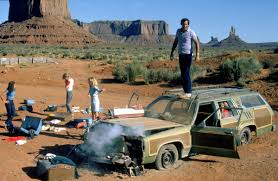
Are you visiting family out of town for the Holidays?  Most likely, you want to avoid this Griswald family-like crash. Driving in unfamiliar areas can be hazardous. You may not know the streets or the terrain or how to drive in weather that is uncommon for your area. 
  * Make sure you limit the distractions. It is just plain stupid to text and drive. It is even more so if you are driving on unfamiliar roads. Many of us have made those drives with kids fighting in the back seat and people arguing over what is on the radio. But it is so important to stay alert and engaged while driving, especially in new places.
   * Know the traffic laws. Do your research before you leave. Some towns have roundabouts, bizarre junctions and different road signs that you are not used to. Know the speed limits as well.
   * Get to know your environment. Will there be icy bridges? Cattle in the streets? (Yes that can be a thing) Depending on where you go, the environment, including the weather, will dictate how you drive. Take it slower if you are at all unsure of your surroundings. 
   * Do you need to winterize your car? Or protect it from heat? Google how to do that properly in the state you are going to. Winterizing in Texas can be different than winterizing in Wyoming.
   * Have a map, in case your phone's map app doesn't work. If you haven't spent time in the mountains before, I can tell you - cell reception can be dicey.  

If you get lost, always remember to:
Pay attention to road signs. They can help guide you.  Avoid sudden changes in direction and illegal manuevers, such as a u-turn on an unfamiliar road. Use your turn signals/hazards. This will let other drivers know your intentions. Reduce your speed. This will give you more time to identify and respond to unexpected obstacles like fallen debris, potholes and curves in the road. 

Make sure to add a extra time to your driving plans.  There is nothing more frustrating than getting lost when you are already late! That anxiety just adds to the hazard of driving in unfamiliar areas!
   
Take your auto insurance with you. Even if you are driving a Rental. If you buy the Rental company's insurance, it will cover any mishap you may have. But that rental insurance can be costly. Your own personal insurance will cover your rental should anything happen, but it will count on your accident history. It is up if you want to buy the Rental insurance or use your own. 

It can be great to get out of town, but drive safely so it doesn't turn disasterous!


There are three ways to request a quote for your insurance needs: 
* Visit our website
* Call Brockman Premier Insurance at 877-987-8683